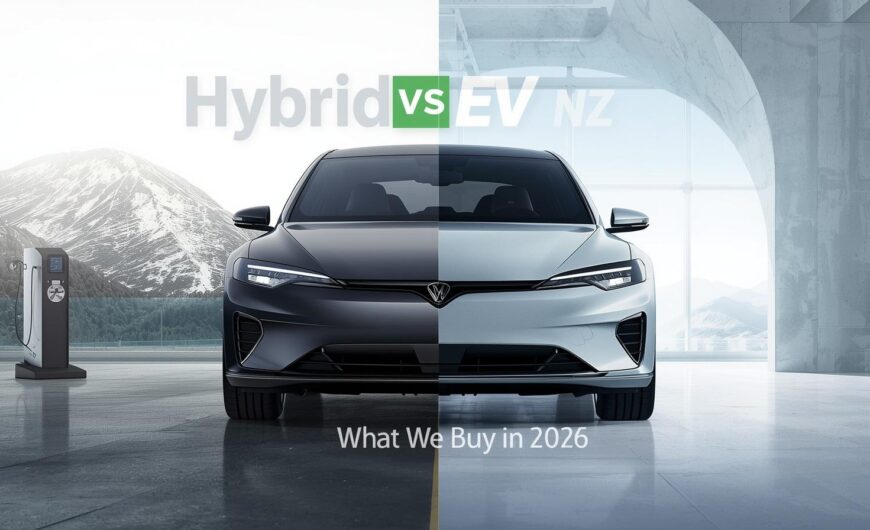
If you are comparing Hybrid vs EV NZ options in 2026, you are not alone. New Zealand buyers are increasingly weighing lower fuel bills, changing road user charges, charging access, and long-term ownership value before deciding what belongs in the driveway. For Auckland commuters, the right answer often depends less on hype and more on daily distance, home charging access, and budget.

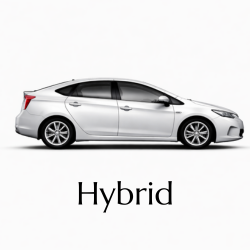
In simple terms, a hybrid suits many Kiwi drivers who want better fuel economy without changing their routine. A full EV suits buyers who can charge conveniently and want the lowest day-to-day energy cost. Plug-in hybrids sit in the middle, but they now require more careful cost analysis because road user charges have changed for electrified vehicles in New Zealand. NZTA confirms light EVs pay the standard light vehicle RUC rate of $76 per 1,000km, while plug-in hybrids pay a reduced rate of $38 per 1,000km. :contentReference[oaicite:0]{index=0}
Hybrid vs EV NZ: the quick answer
If your routine is mostly urban, you cannot easily install a charger, and you want flexibility for spontaneous driving, a hybrid is often the safer buy. If you have off-street parking, can charge at home, and drive enough kilometres to benefit from lower energy costs, an EV can be the smarter long-term move.
- Choose a hybrid if you want easy ownership, strong efficiency, and no charging dependency.
- Choose an EV if you want lower energy costs, quieter driving, and can charge regularly at home or work.
- Choose a plug-in hybrid only if you will actually plug it in consistently and understand the RUC implications.
Why this decision matters more in New Zealand in 2026
The NZ car market has matured. Buyers are no longer choosing electrified vehicles purely for novelty or policy incentives. Instead, they are looking at practical ownership outcomes: range, resale, finance affordability, maintenance, and whether the vehicle actually suits Auckland traffic, school runs, weekend motorway travel, and occasional road trips.
That is especially relevant because the infrastructure picture is improving, but not every household has the same charging setup. EECA says most EV owners in New Zealand do the majority of their charging at home, and its public EV charging dashboard tracks current and planned infrastructure nationwide. :contentReference[oaicite:1]{index=1}
So the best buying decision is no longer “What is the most advanced car?” It is “Which electrified car works best for my lifestyle in NZ?”
Running costs: where hybrids and EVs really differ
Hybrid running costs
A conventional petrol-electric hybrid remains one of the best all-round ownership propositions in New Zealand. You still fill up at the pump, but you typically use much less fuel than a non-hybrid equivalent, especially in stop-start city driving. That makes hybrids highly attractive in Auckland, where congestion rewards regenerative braking and low-speed electric assistance.
Hybrids also avoid charging installation costs and do not require route planning around public chargers. For many households, that convenience is worth a lot.
EV running costs
EVs can still be very cost-effective to run, particularly when charged at home on standard residential electricity. They also have fewer moving parts than combustion vehicles, which can reduce routine mechanical maintenance over time. However, buyers should no longer compare EV ownership only against petrol spend. They should also factor in RUC, charging equipment, tyre wear, and insurance pricing.
That does not make EVs a bad buy. It simply means the cost equation is more nuanced in 2026 than it was a few years ago.
Charging reality for Auckland and NZ-wide drivers
Charging is the biggest practical dividing line in the Hybrid vs EV NZ debate. If you live in a freestanding home with a driveway or garage, an EV becomes much easier to justify. If you live in an apartment, rely on street parking, or move between rentals, ownership can be more complicated.
Public charging continues to improve, especially on major corridors and urban networks, but most owners still benefit most when home charging is their primary habit. EECA’s public charging tools and insights reflect a nationwide network that is expanding, while NZTA’s registration and fleet dashboards are updated regularly to track market movement. :contentReference[oaicite:2]{index=2}
For Auckland drivers, this usually means:
- Hybrid: best for apartment living, shared parking, or uncertain housing arrangements.
- EV: best for households with stable off-street parking and overnight charging access.
If you want a deeper look at infrastructure and charging practicality, see Moku’s charging guide here: EV Charging Stations in NZ: 2026 Guide.
Upfront purchase price and value equation
In many parts of the NZ used market, hybrids still offer the easiest entry point into electrified ownership. Models such as the Toyota Aqua, Prius, Corolla Hybrid, and hybrid SUVs continue to attract buyers who want efficiency without a major learning curve.
EVs can represent excellent value too, but the smartest purchase is highly model-specific. Battery health, charging speed, real-world range, and software support matter more than headline specs alone. Buyers should avoid choosing an EV based only on claimed range. In the real world, weather, terrain, motorway speeds, and tyre condition all affect results.
That is why many first-time buyers still begin with a hybrid, then upgrade to a full EV later once their housing and charging setup make more sense.
Who should buy a hybrid in 2026?
A hybrid is often the right answer if you fit one or more of these profiles:
- You commute in Auckland traffic and want excellent fuel economy.
- You cannot install a charger at home.
- You want lower complexity and familiar refuelling habits.
- You are buying your first imported electrified vehicle.
- You want a practical family car with strong resale appeal.
For many households, the hybrid remains the sweet spot between affordability, ease of use, and lower running costs. It is also one of the easiest vehicle categories to finance because buyers and lenders alike understand the ownership pattern well.
If finance is part of your buying decision, read: Car Finance in NZ: How to Get the Best Car Loan in 2026.
Who should buy an EV in 2026?
An EV makes the most sense if your situation supports it properly:
- You have reliable home charging or workplace charging.
- Your daily driving is predictable.
- You want lower day-to-day energy costs.
- You prefer quiet, smooth urban driving.
- You are comfortable planning longer trips around charging stops when needed.
For Auckland commuters doing moderate daily kilometres, an EV can feel ideal. Traffic becomes less painful in a quiet, instant-torque vehicle, and overnight charging can replace weekly fuel stops entirely. But the ownership win only really materialises when charging access is easy and consistent.
What about plug-in hybrids?
Plug-in hybrids sound like the perfect compromise, but in practice they are only a smart buy for disciplined owners. If you charge them regularly, they can deliver short-run electric driving with petrol backup for longer trips. If you do not charge them often, you carry extra weight and complexity without fully using the technology.
In 2026, plug-in hybrids need to be evaluated more carefully because they now sit in a more complicated middle ground on operating costs. They are not automatically the best of both worlds. For some buyers, they are. For others, they are simply the most expensive compromise.
Resale and long-term ownership in NZ
Resale strength depends on brand, battery reputation, market confidence, and how easy the vehicle is for the next owner to live with. Hybrids still appeal to a broad buyer base because they suit a wide range of housing situations and driving habits. EV resale can be strong too, especially for newer, better-supported models with practical range and good battery durability, but buyers should think more carefully about future buyer demand.
A useful rule is this: the more practical the ownership story, the stronger the resale. In NZ, practicality still matters more than trendiness.
For broader market context, read: New Zealand Vehicle Market Trends 2026.
The smartest buying framework for Kiwi drivers
Before choosing between a hybrid and EV, ask yourself these five questions:
- Where will I charge? If the answer is unclear, a hybrid may be safer.
- How many kilometres do I drive each week? Higher usage can improve the EV case.
- Do I do frequent long trips? Hybrids remain easier for flexible travel.
- Am I buying for five years or more? Longer ownership can favour an EV if charging is sorted.
- Is my budget focused on upfront price or total cost over time? This changes the answer.
If you are importing or sourcing through Japan auctions, the buying process matters as much as the vehicle itself. Learn more here: How Moku Works.
Final verdict: Hybrid vs EV NZ in 2026
The best Hybrid vs EV NZ decision in 2026 is not universal. For many Auckland and NZ-wide buyers, a hybrid is still the most practical and least stressful ownership choice. It delivers strong efficiency, easy refuelling, and broad resale appeal without requiring lifestyle changes.
An EV, however, can be the better long-term buy when charging access is sorted and the vehicle is matched properly to your routine. If you have home charging, mostly urban driving, and a realistic understanding of RUC and trip planning, an EV can be an excellent ownership move.
In other words: buy a hybrid for flexibility, buy an EV for efficiency with the right setup, and buy a plug-in hybrid only if you know exactly why it fits your life.
FAQs
1. Is a hybrid or EV better for Auckland driving?
For many Auckland drivers, hybrids are easier because they thrive in traffic and need no charging access. EVs can be even cheaper to run, but only when home or workplace charging is convenient.
2. Do EVs still save money in NZ after road user charges?
They can, especially for drivers who charge mostly at home and cover steady weekly distances. But the savings are no longer automatic, so buyers need to compare electricity, RUC, insurance, and purchase price together.
3. Are hybrids better than plug-in hybrids in NZ?
For many buyers, yes. Conventional hybrids are simpler and more forgiving. Plug-in hybrids only make strong financial sense when they are charged regularly and used as intended.
4. What is the best first electrified car for a Kiwi buyer?
For many first-time buyers, a hybrid is the easiest entry point. It offers lower fuel use, familiar ownership, and fewer charging concerns while still reducing running costs.