
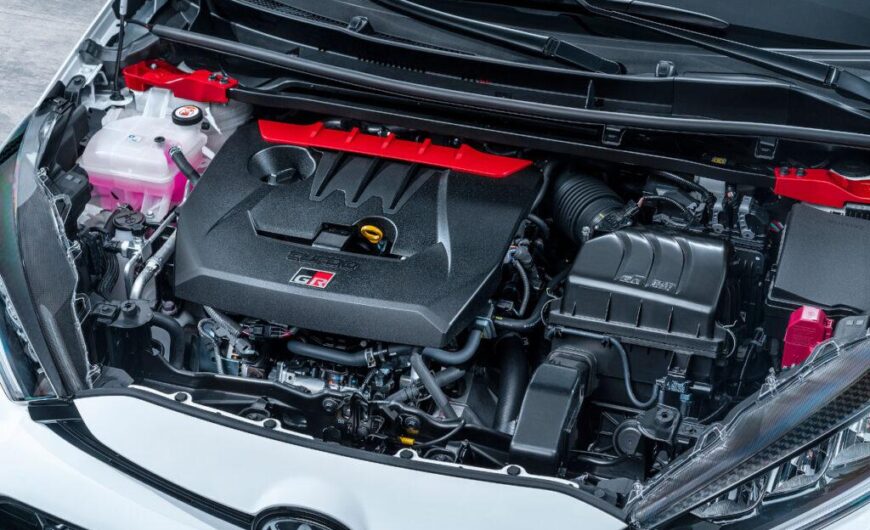
A New Era of Performance from Toyota
Toyota is preparing to redefine its performance lineup with the introduction of the all-new G20E 2.0-liter turbocharged engine. Expected to deliver over 400 horsepower in motorsport applications such as the Toyota GR Yaris race car, this engine represents a major leap forward in both power and engineering flexibility.
This is not just another engine upgrade. It signals Toyota’s long-term vision for performance, efficiency, and adaptability across both racing and road vehicles.
What Makes the G20E Engine Special
The G20E engine is built with a strong focus on future adaptability and performance efficiency. Key highlights include:
- Around 400+ horsepower in racing form
- 2.0-liter turbocharged four-cylinder configuration
- Compatible with up to 20% ethanol fuel blends
- Designed for both longitudinal and transverse layouts
- Improved thermal efficiency and reduced emissions
This flexibility allows Toyota to use the same engine across multiple vehicle platforms, reducing production complexity while improving performance consistency.
Evolution from the G16E Engine
The G20E builds on the success of the G16E engine, which powers models like:
- Toyota GR Corolla
- Toyota GR Yaris
- Lexus LBX
6
The G16E is already known for delivering impressive performance from a compact 3-cylinder setup. The G20E takes this concept further by:
- Increasing displacement to 2.0L
- Adding an extra cylinder for smoother power delivery
- Enhancing durability for both road and track use
This means better refinement without sacrificing the aggressive performance Toyota’s GR lineup is known for.
Why Flexible Engine Mounting Matters
One of the biggest innovations of the G20E is its ability to be mounted in different orientations:
- Transverse layout for front-wheel-drive and compact performance cars
- Longitudinal layout for rear-wheel-drive sports cars
This opens the door for Toyota to use the same engine in a wide range of future models, from hot hatches to potential sports coupes.
For buyers, this means:
- Better platform sharing
- Lower development costs
- More consistent performance across models
What This Means for Future Toyota Cars
The G20E engine is expected to power the next generation of GR performance vehicles. While official models are still under wraps, possibilities include:
- Next-generation GR Yaris
- Future GR Corolla evolution
- New rear-wheel-drive sports platforms
- Potential hybrid performance integration
Production vehicles using the G20E are expected to begin rolling out by the end of 2026.
A Step Toward the Future of Performance
Toyota is not just chasing power numbers. The G20E reflects a broader shift toward:
- Cleaner combustion with ethanol compatibility
- Improved fuel efficiency
- Better weight distribution and lower center of gravity
- Scalable performance across multiple platforms
This aligns with the global move toward sustainable performance rather than pure displacement or fuel consumption.
Why This Matters for Buyers in New Zealand
For the New Zealand market, especially for buyers interested in Japanese imports, this development is important.
At Moku Motors, we often see customers focusing only on price or mileage. But technology like the G20E shows why understanding engine generations and engineering upgrades matters just as much.
Future imports with this engine could offer:
- Higher performance at lower running costs
- Better resale value
- More advanced engineering compared to older models
Final Thoughts
The G20E engine could be one of the most important developments in Toyota’s performance history. If it delivers on its promises, it will redefine what drivers expect from turbocharged engines in both road cars and motorsport.
Toyota is clearly building not just for today, but for the next decade of performance driving.
Photo Credit: driftshop.fr






[…] a new era of performance engineering with the transition from the G16E engine to the upcoming G20E 2.0-liter turbo platform. For buyers in New Zealand, especially those considering Japanese imports, understanding this shift […]
[…] upcoming vehicles powered by new-generation engines like the G20E will not be immediately available in the NZ market. Even if global production begins in 2026, it […]