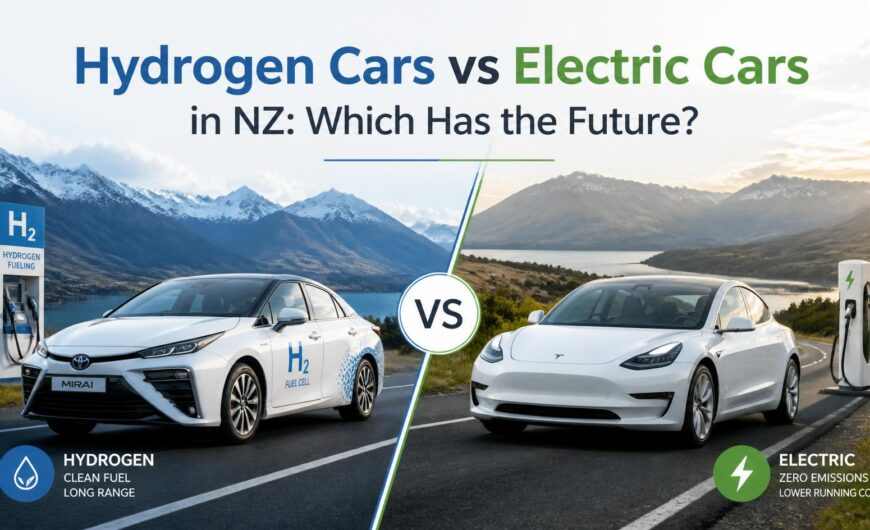
The debate around Hydrogen cars vs electric cars NZ is becoming increasingly relevant as New Zealand continues its transition towards cleaner transport. While battery electric vehicles (BEVs) have gained significant momentum across Auckland and the rest of the country, hydrogen fuel cell vehicles (FCEVs) remain an emerging technology with promising potential for commercial transport and long-distance applications.
So, which technology is better suited for New Zealand’s future? In this guide, we’ll compare hydrogen and electric vehicles across infrastructure, running costs, environmental impact, practicality, and long-term viability.

Understanding the Difference
Battery Electric Vehicles (BEVs)
Battery electric vehicles store electricity in rechargeable batteries and are charged through home chargers or public charging stations. Popular examples available in New Zealand include the Tesla Model Y, BYD Sealion 6 (PHEV), BYD Atto 3, Hyundai Kona Electric, Kia EV5, MG4, and Nissan Leaf.
Hydrogen Fuel Cell Vehicles (FCEVs)
Hydrogen vehicles generate electricity onboard using hydrogen gas and oxygen inside a fuel cell. Instead of charging a battery, drivers refill hydrogen at specialised hydrogen refuelling stations in a process similar to filling a petrol vehicle.
Infrastructure in New Zealand
One of the biggest differences in the Hydrogen cars vs electric cars NZ discussion is infrastructure.
Electric Charging Network
- Rapidly expanding nationwide
- Hundreds of public charging locations
- Home charging available
- Fast chargers available on major highways
For Auckland drivers, charging infrastructure has reached a level where daily commuting is practical without significant planning.
Hydrogen Refuelling Network
- Currently very limited
- Mainly focused on commercial transport projects
- Early investment in heavy freight applicationsLimited public access
Hydrogen infrastructure is still in its infancy and is not yet suitable for widespread passenger vehicle adoption.
Driving Range Comparison
| Feature | Battery EV | Hydrogen Vehicle |
|---|---|---|
| Typical Range | 350–600 km | 500–700 km |
| Refuelling/Charging Time | 20–40 minutes (fast charger) | 3–5 minutes |
| Home Energy Option | Yes | No |
Hydrogen offers faster refuelling and potentially longer range, while electric vehicles provide greater convenience through home charging.
Running Costs
Electric Vehicles
- Lower energy costs
- Minimal servicing requirements
- Fewer moving parts
- Lower maintenance expenses
Hydrogen Vehicles
- Higher fuel production costs
- Limited refuelling competition
- Specialised servicing requirements
- Technology still developing
Currently, battery electric vehicles are generally more affordable to operate in New Zealand.
Environmental Impact
Both technologies produce zero tailpipe emissions, but their overall environmental impact depends on energy production.
Electric Vehicles
New Zealand generates a high proportion of its electricity from renewable sources, making battery electric vehicles particularly environmentally friendly.
Hydrogen Vehicles
Hydrogen can be produced from renewable electricity (“green hydrogen”) or fossil fuels (“grey hydrogen”). The environmental benefits depend largely on how the hydrogen is generated.
Which Technology Suits New Zealand?
For private motorists, battery electric vehicles currently offer the most practical solution.
Reasons include:
- Growing public charging infrastructure
- Home charging convenience
- Lower ownership costs
- Greater vehicle availability
- Strong manufacturer support
Hydrogen may become more important for heavy trucks, buses, commercial fleets, and industries where rapid refuelling and extended range are essential.
Future Outlook
Over the next decade, both technologies are expected to develop further, but they are likely to serve different markets.
Battery electric vehicles are expected to dominate:
- Passenger cars
- Urban commuting
- Family SUVs
- Light commercial vehicles
Hydrogen technology is expected to expand in:
- Heavy freight transport
- Long-haul trucking
- Industrial fleets
- Public transport
Should You Wait for Hydrogen?
For most New Zealand buyers considering a new vehicle in 2026, waiting for hydrogen passenger cars is unlikely to be practical. Battery electric vehicles continue to improve in range, affordability, and charging speed, while hydrogen infrastructure is still several years behind.
If you’re shopping for your next low-emission vehicle, exploring today’s hybrid and EV options is the more realistic choice.
For more buying advice and vehicle comparisons, visit Moku NZ. If you need personalised assistance choosing the right vehicle, you can also contact our team.
Frequently Asked Questions
1. Are hydrogen cars available in New Zealand?
Hydrogen vehicles exist globally, but availability for private buyers in New Zealand remains extremely limited.
2. Which is cheaper to run: hydrogen or electric?
Battery electric vehicles currently have significantly lower running and maintenance costs than hydrogen vehicles.
3. Will hydrogen replace electric cars?
Most industry experts expect hydrogen and battery electric vehicles to complement each other, with hydrogen focusing on commercial transport and EVs dominating passenger vehicles.
4. Is New Zealand investing in hydrogen?
Yes. New Zealand is investing in green hydrogen projects, particularly for freight, export opportunities, and industrial applications.
Final Thoughts
The Hydrogen cars vs electric cars NZ discussion highlights two promising zero-emission technologies, but they are progressing at different speeds. Battery electric vehicles currently offer the strongest combination of affordability, infrastructure, convenience, and availability for everyday Kiwi drivers.
Hydrogen technology remains an exciting long-term prospect, particularly for commercial transport, but for most New Zealand households, battery electric vehicles are likely to remain the preferred low-emission choice well beyond 2026.