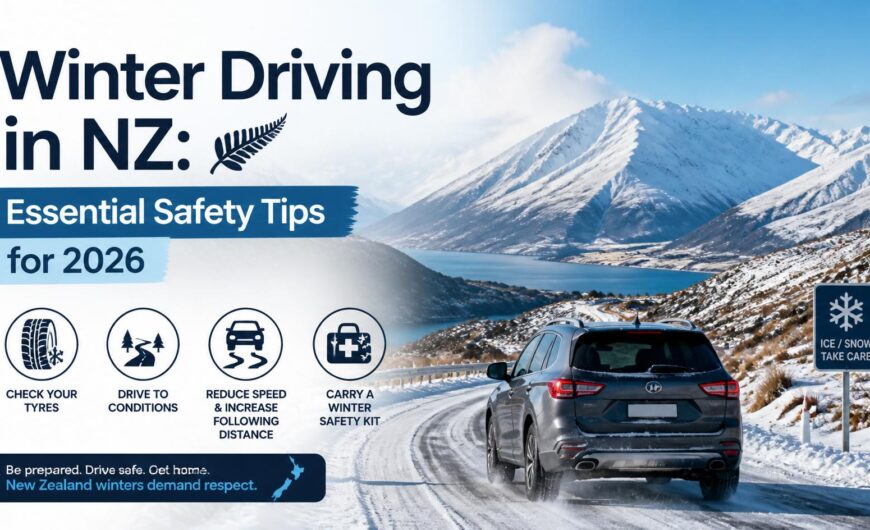
Although New Zealand doesn’t experience the extreme winters seen in many countries, winter driving in NZ still presents unique challenges. Heavy rainfall, fog, black ice, snow-covered alpine roads, and shorter daylight hours all increase the risk of accidents.
Whether you’re commuting through Auckland during heavy rain or planning a South Island ski holiday, preparing both yourself and your vehicle can make every journey safer. This guide covers everything Kiwi drivers should know about winter driving in 2026.

Why Winter Driving Requires Extra Care
Cold weather affects both your vehicle and road conditions. Reduced tyre grip, longer stopping distances and poor visibility all contribute to increased accident risk.
Common winter hazards in New Zealand include:
- Heavy rain and surface flooding
- Fog and reduced visibility
- Black ice on rural and alpine roads
- Snow in higher elevations
- Strong winds in exposed areas
Unlike summer driving, winter conditions require greater anticipation and smoother driving techniques.
Prepare Your Vehicle Before Winter
Before temperatures begin to drop, give your vehicle a thorough inspection.
Winter Vehicle Checklist
- Check tyre tread depth and pressure
- Inspect brakes for wear
- Replace worn windscreen wipers
- Top up coolant and washer fluid
- Test headlights, brake lights and indicators
- Check your battery condition
Preventative maintenance is often far cheaper than emergency repairs or accident-related expenses.
Tyres: Your Most Important Safety Feature
Tyres are the only point of contact between your vehicle and the road. During winter driving in NZ, their condition becomes even more important.
What to Check
- Minimum legal tread depth of 1.5mm (more is recommended for wet roads)
- Correct tyre pressures
- Even wear across all tyres
- No visible cracks or sidewall damage
If you’re travelling through alpine regions, carry snow chains where required and know how to fit them before your trip.
Driving Safely in Heavy Rain
Rain is one of the most common winter hazards, particularly in Auckland and the North Island.
Follow these safety tips:
- Increase your following distance
- Reduce your speed
- Turn on headlights for better visibility
- Avoid sudden braking or steering inputs
- Watch for standing water that may cause aquaplaning
If your vehicle begins to aquaplane, ease off the accelerator and steer smoothly until traction returns. Avoid braking suddenly.
Driving on Black Ice
Black ice is difficult to see because it forms as a thin transparent layer on the road surface.
It commonly appears:
- Early in the morning
- On bridges
- In shaded areas
- On mountain passes
If you encounter black ice, keep the steering wheel straight, avoid harsh braking and reduce speed gradually.
Plan Before You Travel
Checking weather and road conditions before setting off can prevent unnecessary delays and improve safety.
Before long journeys:
- Check weather forecasts
- Review NZTA road alerts
- Allow extra travel time
- Refuel before entering remote areas
- Charge your EV before long trips if applicable
If you’re planning to upgrade to a vehicle better suited for winter conditions, browse the latest reviews and buying guides on Moku NZ.
Pack an Emergency Kit
Every vehicle should carry a basic emergency kit during winter.
Recommended items include:
- Torch with spare batteries
- First aid kit
- Phone charger or power bank
- Blanket and warm clothing
- Water and snacks
- Ice scraper (for colder regions)
These essentials can make a significant difference if you become stranded.
Drive Smoothly and Defensively
Good driving habits become even more important during winter.
Remember to:
- Brake gently
- Accelerate gradually
- Avoid sharp steering movements
- Leave extra space between vehicles
- Use lower gears when descending steep hills
Defensive driving significantly reduces the likelihood of losing control on slippery roads.
Is All-Wheel Drive Better in Winter?
All-wheel drive (AWD) improves traction when accelerating on slippery surfaces, but it does not shorten braking distances.
Regardless of whether your vehicle is front-wheel drive, rear-wheel drive or AWD, good tyres and sensible driving remain the most important safety factors.
Electric and Hybrid Vehicles in Winter
Cold temperatures can slightly reduce EV driving range due to increased battery demand for cabin heating.
To maximise efficiency:
- Pre-condition the cabin while charging
- Maintain correct tyre pressures
- Use Eco driving modes where appropriate
- Plan charging stops on longer journeys
Legal Requirements During Winter
Drivers must continue to comply with all New Zealand road rules regardless of weather conditions.
Ensure your vehicle has:
- Current Warrant of Fitness (WOF)
- Valid registration
- Working lights and indicators
- Tyres meeting legal standards
Failure to maintain your vehicle can increase accident risk and may result in fines.
If you’re unsure which vehicle best suits your winter driving needs, our team can help. Visit the Moku NZ contact page for expert advice.
Frequently Asked Questions
1. Is winter driving in NZ dangerous?
Winter driving can be more challenging due to rain, fog, ice and snow, but proper preparation greatly reduces the risks.
2. Do I need snow chains in New Zealand?
Snow chains are recommended when travelling through alpine areas during winter and may be required on some roads.
3. How often should I check my tyres during winter?
Inspect tyre pressure and tread at least once a month and before any long-distance trip.
4. Are SUVs safer than cars in winter?
SUVs often offer better ground clearance and traction, especially AWD models, but safe driving practices remain the biggest factor in preventing accidents.
Final Thoughts
Winter driving in NZ requires preparation, patience and good vehicle maintenance. By checking your vehicle before the season begins, adapting your driving style to changing conditions and planning journeys carefully, you can enjoy safer travel throughout winter.
Whether you’re navigating Auckland’s rain-soaked streets or heading to the South Island’s ski fields, following these practical winter driving tips will help protect you, your passengers and everyone else on the road.