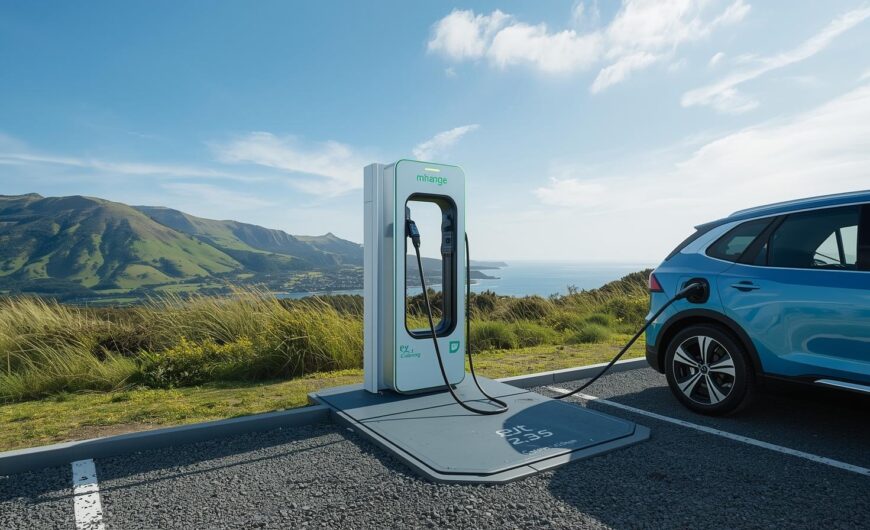
Electric vehicle adoption is accelerating nationwide, and EV charging stations in NZ are expanding rapidly to meet demand. Whether you’re considering your first EV, upgrading to a newer model, or already driving electric in Auckland, understanding the charging infrastructure is essential for cost-effective and stress-free ownership.
In this 2026 guide, we break down public charging networks, pricing structures, home charging installation, fast-charging availability, and what to expect over the next few years.

Why EV Charging Infrastructure Matters in New Zealand
New Zealand’s geography, urban density, and reliance on road transport make charging accessibility critical. Auckland alone accounts for a significant percentage of national EV registrations, but regional centres such as Hamilton, Wellington, Christchurch, and Tauranga are also seeing strong growth.
Unlike petrol stations, EV charging stations in NZ vary in speed, pricing model, and availability. Planning your charging strategy—especially for long-distance travel—is part of smart EV ownership.
Types of EV Charging Stations in NZ
1. Home Charging (AC Charging)
Most EV owners in New Zealand charge at home. A standard wall socket (2.3kW) is the slowest method and may add 10–15km of range per hour. A professionally installed wallbox (7kW–22kW) dramatically improves charging times.
Typical installation cost: $1,500–$3,000 depending on switchboard upgrades and cable runs.
For daily Auckland commuters averaging 30–50km per day, overnight home charging is usually sufficient.
2. Public AC Charging
Often located at shopping centres, supermarkets, and council car parks, public AC chargers are suitable for top-ups. Speeds typically range between 7kW and 22kW.
3. DC Fast Charging
DC fast chargers (50kW–300kW+) are the backbone of long-distance EV travel. These chargers can add 100–300km of range in 20–30 minutes, depending on the vehicle.
Major highways connecting Auckland to Hamilton, Tauranga, and Wellington now have reliable fast-charging corridors.
Major EV Charging Networks in NZ
The landscape of EV charging stations in NZ is dominated by several key providers:
- ChargeNet – Nationwide fast-charging network with extensive highway coverage.
- Meridian (Zero) – Focused on renewable-powered charging solutions.
- Z Energy & BP Pulse – Expanding into high-speed DC infrastructure.
- Vector (Auckland) – Strong presence in Auckland urban locations.
Most networks operate via app-based activation or RFID cards. Pricing structures vary.
Cost of Using EV Charging Stations in NZ
Public Charging Costs
DC fast charging typically costs between $0.60 and $0.85 per kWh, depending on provider and charger speed.
For example, charging a 60kWh battery from 20% to 80% (36kWh) could cost $22–$30.
Home Charging Costs
Home charging is significantly cheaper. With average residential electricity rates around $0.25–$0.35 per kWh:
- 60kWh full charge = approximately $15–$21
- Cost per 100km = often under $6
This is why many EV buyers prioritise installing home charging infrastructure.
EV Charging Stations in NZ: Auckland Focus
Auckland leads the country in EV registrations and charging density. Fast chargers are strategically located along:
- SH1 corridor (North & South)
- Western Motorway
- Eastern suburbs and airport zone
Apartment dwellers face more complexity. Body corporate approvals and shared infrastructure planning are essential. If you’re evaluating whether an EV suits your situation, our vehicle buying resources provide practical ownership insights.
Charging Times by Vehicle Type
Charging time depends on battery size and onboard charging capability.
- Hybrid (non-plug-in): No external charging required.
- Plug-in Hybrid (PHEV): 2–4 hours on home wallbox.
- Standard EV (40–60kWh): 6–8 hours on 7kW wallbox.
- Large EV (70–100kWh): 8–12 hours at home; 30–40 minutes on fast charger.
If you’re comparing electrified vehicles, explore our EV consultation support for tailored guidance.
Are There Enough EV Charging Stations in NZ?
Infrastructure is expanding, but peak holiday periods can still cause congestion at popular DC chargers. The government and private sector continue to invest heavily in closing rural coverage gaps.
For most urban drivers—particularly in Auckland—range anxiety is no longer a major barrier.
Future of EV Charging in New Zealand
Key developments expected through 2026–2028 include:
- Ultra-rapid 300kW+ highway chargers
- More solar-integrated charging hubs
- Smart load-balancing in apartment complexes
- Vehicle-to-grid (V2G) pilot programmes
As battery technology improves and EV prices stabilise, charging convenience will increasingly match—or exceed—the simplicity of refuelling petrol vehicles.
Is Installing Home Charging Worth It?
For most EV owners, yes. Home charging offers:
- Lower cost per kilometre
- Convenience and overnight charging
- Reduced reliance on public infrastructure
- Increased property appeal for future buyers
If you’re weighing up ownership costs, review broader financial considerations in our automotive finance guides on Moku.
Frequently Asked Questions
1. How many EV charging stations are there in NZ?
New Zealand has hundreds of public charging locations, with continuous expansion across main highways and urban centres.
2. How long does it take to charge an EV in Auckland?
Fast charging can take 20–40 minutes for an 80% top-up, while home charging typically takes 6–10 hours depending on setup.
3. Are EV charging stations in NZ free?
Most public chargers are paid. Some supermarkets and councils previously offered free charging, but this is becoming less common.
4. Is it cheaper to charge at home or public stations?
Home charging is significantly cheaper due to lower residential electricity rates.
Final Thoughts
The expansion of EV charging stations in NZ has made electric vehicle ownership more practical than ever—particularly in Auckland and major regional centres. With growing infrastructure, improving battery technology, and strong public adoption, EV drivers can expect continued enhancements in speed, accessibility, and reliability.
If you’re planning your switch to electric or upgrading your current vehicle, staying informed about charging infrastructure is a critical part of the decision-making process.