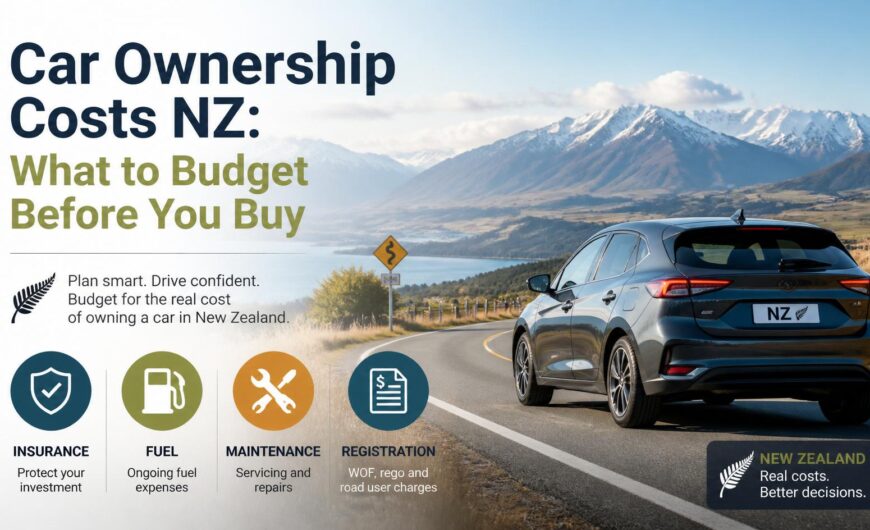
Car ownership costs NZ buyers need to understand go far beyond the purchase price. Whether you are buying your first car, upgrading to a family SUV, choosing a hybrid, or comparing a used import against a newer model, the real cost of ownership includes fuel, insurance, servicing, tyres, WoF, rego, road user charges, depreciation and unexpected repairs.
Many buyers focus mainly on the sale price because it is the biggest number on the listing. However, the better question is: how much will this car cost you every year after you buy it? In New Zealand, every vehicle on the road must meet ongoing legal and maintenance requirements, including current licensing and a valid WoF where applicable. Diesel, electric and plug-in hybrid vehicles may also require Road User Charges depending on vehicle type and usage. The New Zealand Government confirms that vehicles need current licensing to be used legally on the road, and RUC applies to diesel and electric vehicles, including plug-in hybrids that run on petrol. :contentReference[oaicite:0]{index=0}

Why Car Ownership Costs Matter Before Buying
A cheaper car is not always cheaper to own. A low purchase price can become expensive if the car has poor fuel economy, high insurance premiums, costly parts, weak resale value or overdue maintenance. On the other hand, a slightly more expensive vehicle with strong reliability, lower running costs and better resale value may be smarter over three to five years.
This is especially important for used car buyers in Auckland and across New Zealand, where buyers often compare Japanese imports, hybrids, compact hatchbacks, SUVs and family vehicles. Before choosing a car, it helps to estimate the full ownership cost instead of judging the vehicle only by price, mileage and appearance.
If you are still comparing models, you can also review the latest buying advice on Moku NZ to understand which vehicles suit your budget, driving pattern and long-term ownership plans.
1. Purchase Price and On-Road Costs
The purchase price is the starting point, but not always the final amount you need to pay. Depending on the seller, vehicle type and import status, there may be additional on-road costs such as registration, licensing, number plates, compliance, dealer delivery charges or grooming fees.
For used cars already registered in New Zealand, check whether the vehicle has current rego and WoF. For fresh imports, ask the dealer exactly what is included in the drive-away price. A car advertised at a lower price may not be the best deal if key on-road costs are excluded.
Before paying a deposit, ask for a clear written breakdown covering:
- Vehicle sale price
- Registration or licensing status
- WoF expiry date
- Dealer fees, if any
- Warranty or mechanical protection plan cost
- Finance establishment fees, if buying through finance
2. Fuel Costs
Fuel is one of the biggest ongoing car ownership costs NZ drivers face. Your annual fuel spend depends on how far you drive, whether most of your driving is city or motorway-based, and how fuel-efficient the vehicle is.
A small hybrid hatchback may be very economical for daily Auckland commuting, while a larger petrol SUV may cost more to run, especially in stop-start traffic. Diesel vehicles can offer strong fuel economy, but buyers must also consider Road User Charges. Electric vehicles can reduce petrol station visits, but charging access, electricity cost and RUC must be considered.
As a simple rule, estimate your monthly kilometres first. A driver covering 1,000 km per month will have a very different ownership cost compared with someone driving 2,000 km or more. For most families, fuel cost should be calculated before choosing between petrol, hybrid, diesel or electric.
3. Road User Charges for Diesel, EV and PHEV Vehicles
Road User Charges are an important cost that buyers sometimes forget. RUC is generally paid in advance based on distance travelled, and applies mainly to diesel vehicles, electric vehicles and plug-in hybrid vehicles. The Ministry of Transport states that RUC is paid mainly by diesel vehicle owners and, from 1 April 2024, by owners of electric vehicles and plug-in hybrid vehicles. :contentReference[oaicite:1]{index=1}
This means a diesel SUV, EV or plug-in hybrid may still be a good choice, but you should calculate the full picture. Do not compare petrol cost against electricity or diesel cost only. Include RUC, servicing, depreciation, battery condition and resale value before deciding.
For buyers who drive long distances, RUC can materially affect annual ownership cost. For buyers who mostly drive short city trips, the calculation may look different. The best option depends on your actual driving pattern.
4. WoF and Rego
A valid Warrant of Fitness confirms that the vehicle met minimum safety requirements at the time of inspection. Rego, or vehicle licensing, is also required to keep the vehicle legally on the road. NZTA provides licensing fee information and notes that fees can vary by vehicle type and related charges. :contentReference[oaicite:2]{index=2}
When buying a used car, always check the WoF expiry date. A long WoF gives some short-term peace of mind, but it does not guarantee the vehicle is mechanically perfect. A fresh WoF is helpful, but a pre-purchase inspection is still recommended for higher-value vehicles, hybrids, European cars and SUVs.
Budget for WoF inspections annually or more often depending on the age of the vehicle. Also remember that failing a WoF can create extra repair costs for tyres, brakes, lights, suspension, windscreen damage or other safety-related issues.
5. Insurance Costs
Insurance is another major ownership cost. Premiums can vary based on vehicle value, driver age, claims history, suburb, parking location, vehicle model, modification status and intended use.
Before buying, get an insurance estimate for the exact make and model. A sporty turbo vehicle, European SUV or high-value hybrid may cost more to insure than a basic hatchback. Some vehicles may also have higher excess levels or stricter policy conditions.
At minimum, compare:
- Comprehensive insurance
- Third party, fire and theft
- Third party only
- Excess amount
- Agreed value vs market value
- Windscreen cover
- Rental car cover after accident
If you are buying through finance, comprehensive insurance may be required by the lender. You can explore related guidance through car insurance NZ advice before finalising your purchase.
6. Servicing and Maintenance
Every vehicle needs regular servicing. Even reliable Japanese models require oil changes, filters, brake checks, fluid replacement, tyre rotation and periodic inspections. Skipping maintenance may save money short term, but it usually reduces reliability and resale value.
Typical maintenance items include:
- Engine oil and filter
- Air filter and cabin filter
- Brake pads and discs
- Transmission fluid
- Coolant
- Spark plugs
- Hybrid battery health checks
- Suspension components
Before buying a used car, ask for service records. A vehicle with consistent maintenance history is usually a safer buy than a cheaper vehicle with missing records. For hybrids and EVs, battery health and specialist diagnostic checks are especially important.
7. Tyres, Brakes and Wear Items
Tyres are often overlooked during the buying process. A car may look clean, but if all four tyres are near replacement level, the buyer may face a significant cost soon after purchase.
Check tyre brand, tread depth and evenness of wear. Uneven tyre wear may indicate poor wheel alignment, worn suspension or previous accident damage. Bigger SUVs and performance models often require more expensive tyres than small hatchbacks.
Brakes are another important cost. During a test drive, listen for squealing, grinding, vibration or pulling to one side. These may indicate brake wear or suspension issues. If unsure, arrange a pre-purchase inspection before committing.
8. Depreciation and Resale Value
Depreciation is one of the largest hidden car ownership costs. It is the difference between what you pay for the vehicle and what you can sell it for later.
Some cars hold value better because they are trusted, fuel-efficient, easy to maintain and popular in New Zealand. Toyota Aqua, Toyota Corolla, Toyota Prius, Honda Fit, Honda Vezel, Mazda CX-5, Suzuki Swift and similar mainstream models often attract strong used-market interest, depending on condition, mileage and specification.
Vehicles with poor parts availability, high repair costs, unusual specifications or weak buyer demand may depreciate faster. When choosing a car, think about who will buy it from you in three to five years.
If resale value matters, also read sell my car NZ tips to understand what future buyers usually look for.
9. Finance Costs
If you are using finance, the monthly repayment is only part of the cost. You also need to consider interest rate, loan term, deposit amount, establishment fees, early repayment conditions and total amount payable.
A lower monthly payment may look attractive, but a longer loan term can increase the total cost. Before signing, compare the total repayment amount across different finance options. Also avoid stretching your budget so tightly that servicing, insurance and repairs become difficult to manage.
For more details, visit car finance NZ guidance before choosing a lender or dealer finance option.
10. Repairs and Unexpected Costs
No used vehicle is completely risk-free. Even well-maintained cars can need repairs. Common unexpected costs include batteries, alternators, sensors, suspension bushes, air conditioning repairs, transmission issues, hybrid system faults and infotainment problems.
Set aside an emergency maintenance fund after buying. This is especially important for older vehicles, high-mileage imports, European models and cars without warranty support.
A good approach is to keep a separate annual vehicle maintenance budget instead of reacting only when something fails. This makes ownership more predictable and reduces financial stress.
How to Estimate Your Total Car Ownership Cost
Before buying, create a simple annual cost estimate:
- Annual finance repayments, if applicable
- Fuel or charging cost
- Road User Charges, if applicable
- Insurance premium
- WoF and rego
- Servicing
- Tyres and brakes
- Repairs and emergency fund
- Expected depreciation
This gives you a more realistic view of affordability. A vehicle that fits your purchase budget may not always fit your ownership budget.
Best Ownership Choices for NZ Buyers
For city commuting, small petrol and hybrid hatchbacks often make sense because they are easy to park, economical and usually affordable to maintain. For families, compact SUVs and wagons can provide better space while still keeping running costs manageable. For high-mileage drivers, fuel efficiency becomes more important, but RUC and servicing must be included in the calculation.
For buyers focused on long-term value, choose a model with good local demand, available parts, strong safety features and a clear service history. The best car is not always the cheapest car. It is the car that fits your daily use, budget and resale plan.
Final Thoughts
Understanding car ownership costs NZ buyers face is one of the smartest steps before purchasing any vehicle. The sale price matters, but it is only one part of the decision. Fuel, RUC, insurance, servicing, WoF, rego, tyres, repairs and depreciation can significantly affect your true cost over time.
Before buying, compare the full ownership cost across at least two or three vehicles. Check the service history, inspect the car properly, calculate annual running costs and think about future resale value. A well-chosen car should be affordable not just on the day you buy it, but every month you own it.
For more practical buying advice, explore the latest vehicle guides on Moku Buying & Ownership Guides.
FAQs
What are the main car ownership costs in NZ?
The main costs include fuel, insurance, WoF, rego, servicing, tyres, repairs, depreciation and Road User Charges if the vehicle is diesel, electric or plug-in hybrid.
Is a hybrid cheaper to own in New Zealand?
A hybrid can be cheaper to run than a petrol-only vehicle, especially for city driving. However, buyers should still check battery condition, servicing history, insurance cost and resale value.
Do electric cars pay Road User Charges in NZ?
Yes. Electric vehicles and plug-in hybrid vehicles are included in the Road User Charges system, so buyers should include RUC when comparing EVs with petrol or hybrid vehicles.
How much should I budget for used car maintenance?
The amount depends on the vehicle’s age, mileage, brand and condition. As a general approach, keep a separate yearly budget for servicing, tyres, brakes and unexpected repairs.